Department of Culture and Learning
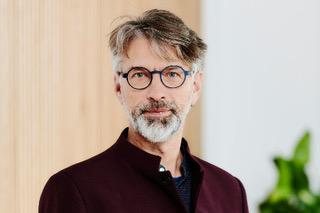
Doctoral defence by Falk Heinrich
Aalborg University
Room 3.563/3.565, Rendsburggade 14, Aalborg University
20.08.2026 Kl. 13:00 - 16:00
Tilmeldingsfrist: 16.08.2026

English

On location
Aalborg University
Room 3.563/3.565, Rendsburggade 14, Aalborg University
20.08.2026 Kl. 13:00 - 16:00
Tilmeldingsfrist: 16.08.2026
English
On location
Department of Culture and Learning
Doctoral defence by Falk Heinrich
Aalborg University
Room 3.563/3.565, Rendsburggade 14, Aalborg University
20.08.2026 Kl. 13:00 - 16:00
Tilmeldingsfrist: 16.08.2026
English
On location
Aalborg University
Room 3.563/3.565, Rendsburggade 14, Aalborg University
20.08.2026 Kl. 13:00 - 16:00
Tilmeldingsfrist: 16.08.2026
English
On location
Abstract:
The doctoral thesis, bearing the title Performative Beauty, consists of three parts: the book A Somaesthetics of Performative Beauty - Tangoing Desire and Nostalgia (2023), the text A Pragmatist Account of Performative Beauty (2025, not yet published), and the video article Performative Beauty - The Pleasure of Dancing (Argentine Tango) (2024). The book is an elaboration of the aesthetic notion of performative beauty. Performative beauty refers to the sentiment and experience of the beauty of one’s own actions. My elaborations are based on my own experiences of dancing Argentine tango. The second text develops the notion of performative beauty within the framework of pragmatist aesthetics and somaesthetics, thereby expanding the Deweyan pragmatist approach to include a notion of (performative) beauty. The video article introduces the notion of performative beauty using visual and auditory means. What follows are the individual abstracts of the three texts/works.
1. A Somaesthetics of Performative Beauty - Tangoing Desire and Nostalgia
This book develops an original theory of performative beauty. Philosophical aesthetics has largely neglected one’s own actions as potential experiences of the beautiful. Throughout the book, the author uses his own experiences of Argentine tango as a case study; one important incentive for social dancing is to have pleasurable and beautiful experiences. This book begins by investigating the methodological reasons why beauty in modernity has been seen to result only from contemplating external objects. It then builds a theory of performative beauty that incorporates findings from new phenomenology, neuroaesthetics, enactivism, and somaesthetics and that reassesses existing inquiries into beauty. The result is an account that identifies kinaesthetic awareness as the point of emergence of both theory and practice, of creation (poiesis) and perception (aisthesis), and of moving (agency) and being moved (reception). Performative beauty is the pleasure of being moved by the dance, where the dancer feels like both a creative improvisor and an integrated part of the activity itself. Chapter 1 introduces the notion of performative beauty as a fundamental but ignored topic in aesthetics; it is a blind spot due to the methodology of philosophical aesthetics. In most aesthetic theories, the experience of the beautiful is presented either as an attribute of external objects or a cognitive occurrence within the observer of objects deemed beautiful. This approach conceals the possibility of a beautiful experience of one’s own movements and actions because the reception of one’s own actions complicates observational mechanisms. This chapter outlines the main theoretical tasks and ambitions of a theory of performative beauty. The chapter also introduces the social dance Argentine tango, which is the investigation’s empirical and experiential anchor, and discusses the challenges and validity of this cultural activity for a theory of performative beauty. Finally, the chapter presents an overview of the individual chapters and their topics. Chapter 2, Preparing the philosophical dance floor, notes that one’s own actions have not been part of dominant theories of aesthetics, except in somaesthetics. The empirical soundness of this investigation lies in the author’s own experiences and in the documented fact that quotidian language expresses beautiful experiences of dancing Argentine tango. The theoretical validity of the work is grounded in the equivocal relationship between pleasure as a complex psychophysiological occurrence and the aesthetic pleasure of beauty. The latter has been conceptualised as a mental and disembodied pleasure. But pleasure is always an embodied sentiment that spurs its own active perpetuation. This complicates the aesthetic distinction between presentation (object) and perception (subject), and it opens up a theory of beautiful experiences of one’s own movements. The second argument explains that beauty is a theoretical and methodological paradox because Western modernity sees it as an immediate sentiment that cannot be understood by means of arguments but is nevertheless supported by practical and theoretical knowledge. The chapter claims that aesthetics’ investigation of the beautiful is fuelled by the wish to experience the beautiful through understanding and knowledge of these issues. The experience of the beautiful is grounded in yet also transcends both practical and theoretical investigations.
Chapter 3, Methodological dances, takes a closer look at the methodological difficulties of the book’s investigation. The academic field of aesthetics came about through a potentiation of the contemplating observer (the subject) as a position favoured by science and art alike (the object). Contrarily, social dancing positions the aesthetician as an agential part of the event without the possibility of adopting a contemplative critical distance. Thus, a theory of performative beauty must spring from—and serve—embodied practices by acknowledging that our aesthetic experiences are forged by actual dance movements. In this respect, somaesthetics offers a multidimensional, explorative framework that allows for the investigation of the complex experiential aspects of dance movements. The chapter argues that aesthetic experience and aesthetic theory are different forms of observing and integrating this complexity, but that both are rooted in kinaesthetic and proprioceptive awareness. Aesthetic experience integrates and consummates the complexity and inherent tensions through the dance movements proper. Contrarily, aesthetic theory connects the identified constituents of an experience by describing their relationships. Even though they spring from the same experiential field, these two observational modes are incommensurable, but the latter cannot exist without the former.
Chapter 4, Freedom and poiesis, discusses one important cornerstone of Kant’s aesthetic theory of taste that has shaped our philosophical understanding of aesthetic beauty: the purposeless interplay between imagination and understanding and its inherent telos to create a theoretical foundation for the free human subject. This chapter investigates two issues. First, it asks how novel findings on the significance of embodiment for perception and cognition can advance our understanding of beauty while taking into consideration Kant’s concept. The chapter puts the body back into the Kantian purposeless interplay of imagination and perception. Second, this chapter discusses the notion of freedom in performative beauty. Referring to both Dewey and Nietzsche, the chapter approaches performative beauty from the experiential perspective of poiesis (creation). An essential feature of Argentine tango is improvisation and the creation of action. The focal shift from contemplation to creation uncovers the formerly hidden and sublimated poietic elements in Kantian aesthetics. The chapter cements its findings with a detailed analysis of Argentine tango as a particular framework for moving together in social encounters. Promises and grace, Chapter 5 begins by noting that Argentine tango makes promises to dancers—among others, the promise of pleasurable and joyful experiences. Promises are also essential and integrated parts of the beautiful. This chapter traces the promise of the beautiful in the rare aesthetic theories of dance; it focuses on Hogarth’s dicsussion of the serpentine line as the main characteristic of the dynamicity and beauty of dance and on Souriau’s aesthetics of dance, which features ease of grace as its main component. Souriau’s aesthetics contains an epistemological shift because the identification of the aesthetic qualities of movement springs from Souriau’s own experiences with movement. My elaborations consider both treatises as steppingstones towards a theory of beautiful experiences of one’s own movements. The last section completes the picture by applying some of Schmitz’s findings from his new phenomenology and his notion of the felt or living body. Of special interest is his notion of the vital drive brought about by the dynamicities of contraction and extension and of encorporation (Einleibung) and excorporation (Ausleibung). The vital drive transgresses the physical body’s delimitations. The awareness of this dynamicity, however, is always post factum and is the constitutive element of the promised grace of dancing couples.
The Appendix, My Argentine tango, introduces the main aspects of Argentine tango. A reader not acquainted with this dance should be able to acquire a rudimentary understanding of it. However, I do not want to repeat what others have written about Argentine tango and what can be read in the many books about tango culture. Rather, my descriptions of Argentine tango— its basic techniques, its dos and don’ts, its music, histories, and lyrics—are coloured by my own experiences and my overall search for a theory of performative beauty. Therefore, my presentation of tango’s characteristics aims at excavating features that conceptually frame and empirically ground my inquiry. In a way, the Appendix creates a platform for concretising my theory of experiences of beauty by connecting the theory to the concrete structures and palpable techniques of tango—its history, stories, and affective atmospheres. The Appendix’s various sections can be read in between the main chapters, and each chapter will direct the reader to one or more of these sections and vice versa.
2. A Pragmatist Account of Performative Beauty (not yet published)The text explores the performative dimensions of the experience of beauty, with an empirical foundation grounded in my own and others’ experiences of somatic practices (such as dancing, yoga, and hiking). The text develops such a notion as an elaboration of pragmatist aesthetics (Dewey) and somaesthetics (Shusterman). The book clarifies the beauty is regarded as a field dependent aesthetic judgment of an extraordinary and exemplary event relevant to a distinct social field of action and agency. The sentiment of beauty is not considered an expression of an essence or distinct aesthetic features. Rather, beauty is understood as an enacted perception. The text identifies the reason for Deweyan aesthetics’ dismissal of the notion of beauty as stemming from Dewey’s uncritical acceptance of beauty as an essence of objects—a view promoted by bourgeois society. The text expands this by describing the fundamental Western epistemological difficulty in aesthetically observing one’s own actions. The aesthetic perception of one’s own actions challenges Western aesthetics’ distinctions between subject and object, agency and patiency, and artist and audience. To counter this, the text identifies the somaesthetic promotion of practice as an intrinsic part of philosophy, offering a methodological solution to the epistemological paradox mentioned before. Only the experiential dimensions of aesthetic practice can foreground the significance of embodiment for the aesthetic sentiment of beauty. Here, a somaesthetic awareness is the common source and purpose of both aesthetic practice as well as philosophical aesthetics. Furthermore, cultivating and acquiring the skill of aesthetic awareness scaffolds any experience of beauty, as beautiful experiences, in turn, enhance somaesthetic awareness. Subsequently, the text revisits Dewey’s concept of unity as the central component of his notion of aesthetic experience. While the text does not question the importance of experiential unity, it does challenge its processual status. Dewey asserts that the experience of a qualitative and immediate unity is the aesthetic experience, and that this unity provides the foundation for realizing its various emotional, intellectual, and practical aspects. In contrast, the text argues that various experiences and realizations (grounded in aesthetic awareness) can potentially culminate in a unifying aesthetic experience of aesthetic presence, which refers to the experienced flow of interactions. The text critically examines the concept of flow within a pragmatist context, highlighting the annihilation of self-consciousness as the primary limitation of flow theory (Csikszentmihalyi). Experiencing the beauty of one’s own actions, however, remains a reflective judgment including a specific type of self-consciousness. This implies that the experience of one’s own actions must be contain a process of “objectivization” (Craig) of action, without constructing a subject-object duality. Proprioception-in-action does not allow for the formation of movement as a determinate object; instead, objectivization refers to the continuous process of creating indeterminate mental presentations by providing an experience of oneself as an intrinsic constituent of ongoing interactions. The text incorporates findings from phenomenology and cognitive science, elaborating on the concepts of pre-reflective self-consciousness and phenomenological retention. These concepts are presented as theoretical possibilities for developing aesthetic awareness of one’s own actions.
The text further elaborates on aesthetic experience by drawing on Dewey’s notion of transaction. A transaction describes the mutual dependency and transformation of interacting entities. It highlights an inherent and fundamental dimension of an unfolding relationship, describing not only a distinct understanding but also an experiential modality that brings into awareness the performativity of interaction. Every aesthetic experience emerges from and entails this performative relationship. It attains the quality of the beautiful when playfulness becomes the driving force of the aesthetic transaction. The sentiment of beauty performs and sustains itself as a playful unfolding of life. This chapter examines Schiller’s notion of play and living form through a pragmatist lens as a consummatory experience. Consummatory experience of beauty should be understood as an erotic awareness (Henning; Alexander) of the process of both playing with and being played by the ongoing interaction—of surrendering oneself without losing oneself in a pre-reflective state of automated action. The text concludes by outlining the broader philosophical significance and potential applications of these ideas to other practices, ranging from everyday activities to professional and leisure practices.
3. Performative Beauty - The Pleasure of Dancing (Argentine Tango) (2024).
The video article outlines an aesthetic theory of performative beauty. The article investigates experiences of beauty that occur while one is bodily engaged in an activity. The concrete case is the social dance Argentine tango. The article shows that the flow of interaction between the dancers and the music brings about the dance as an agent proper. The distributed agency allows for a situated, aesthetic awareness that includes the kinaesthetic awareness of the partner’s actions. This transactional awareness crystalizes as the sentiment of beauty.
The video can be seen here: https://jer.openlibhums.org/article/id/10466/
Attendees
- Chair of the defence: Professor Julie Borup Jensen – email: jbjen@ikk.aau.dk
- Professor, Dr. Phil. Anne Elisabeth Sejten, Department of Communication and Humanistic Science, Roskilde University, Denmark – 1st opponent
- Dr. Leena Rouhiainen, Head of University of the Arts Research Institute, Professor of Artistic Research, University of the Arts Helsinki, Finland – 2nd opponent
- Chair of the committee, Professor Christian Jantzen, Department of Culture and Communication, Aalborg University.